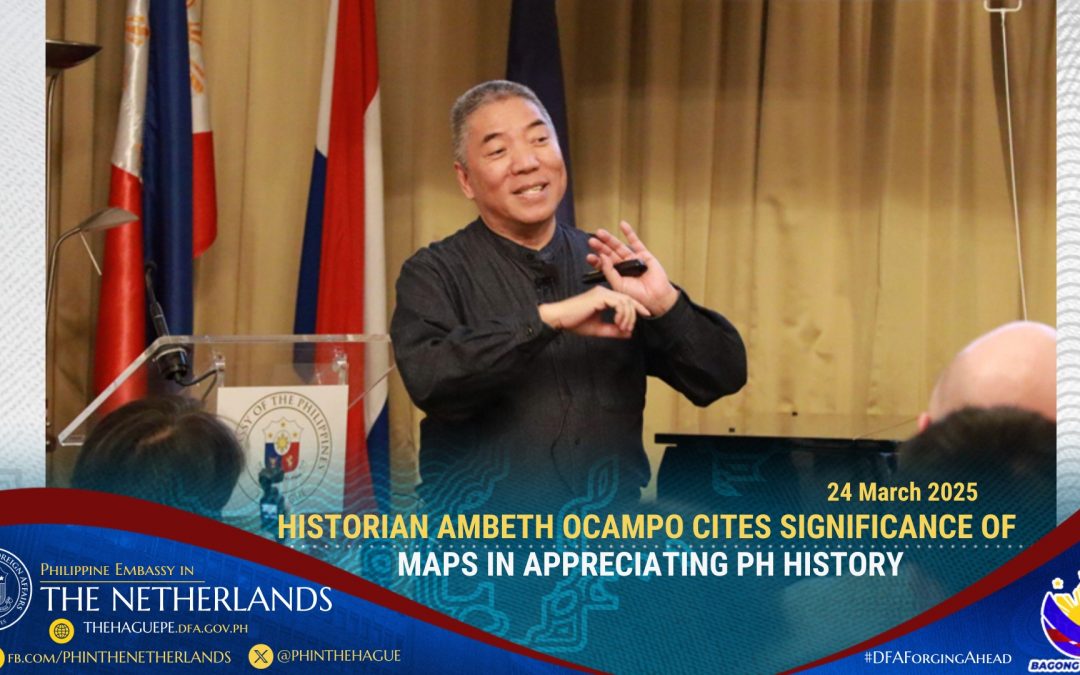
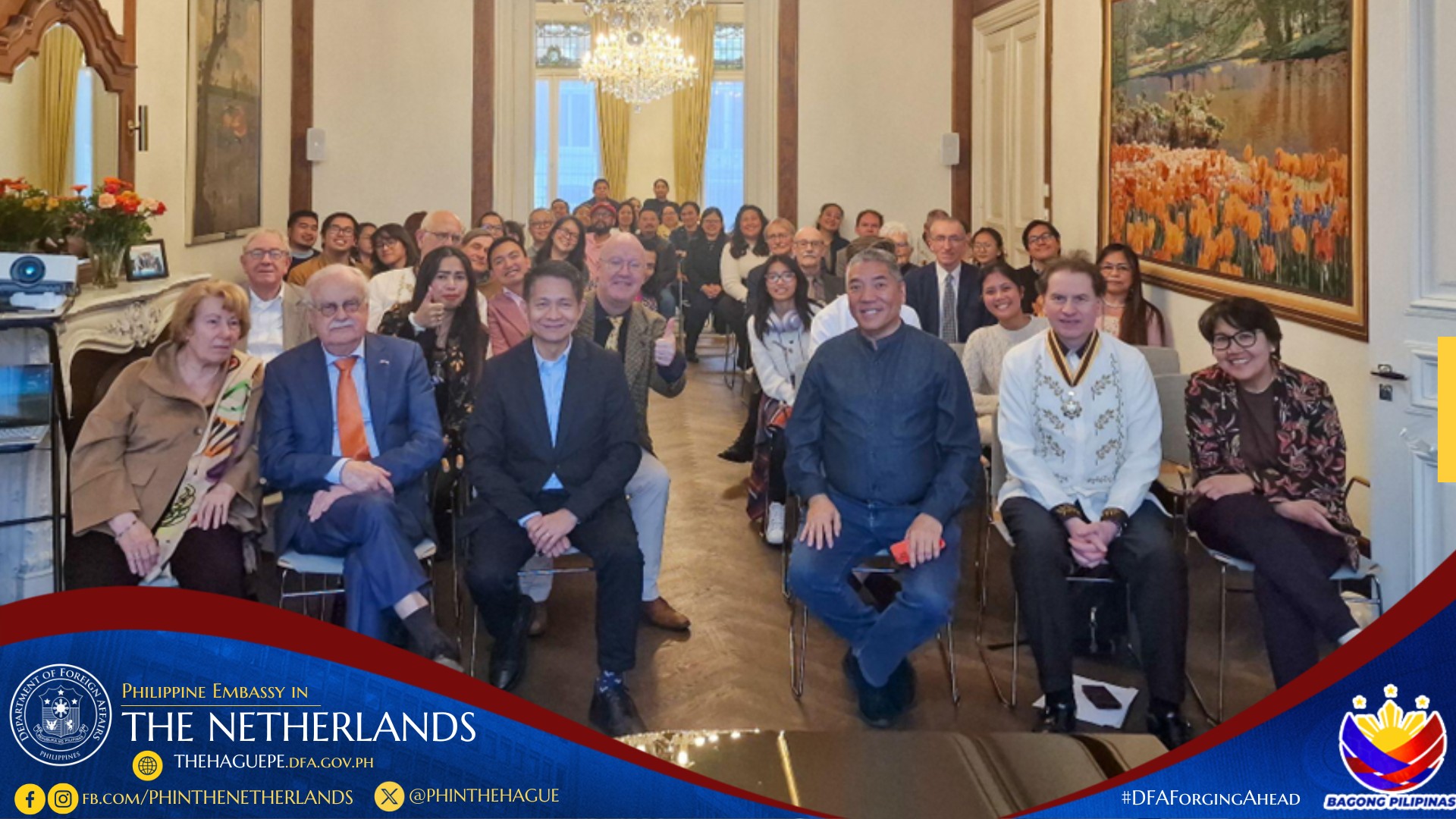
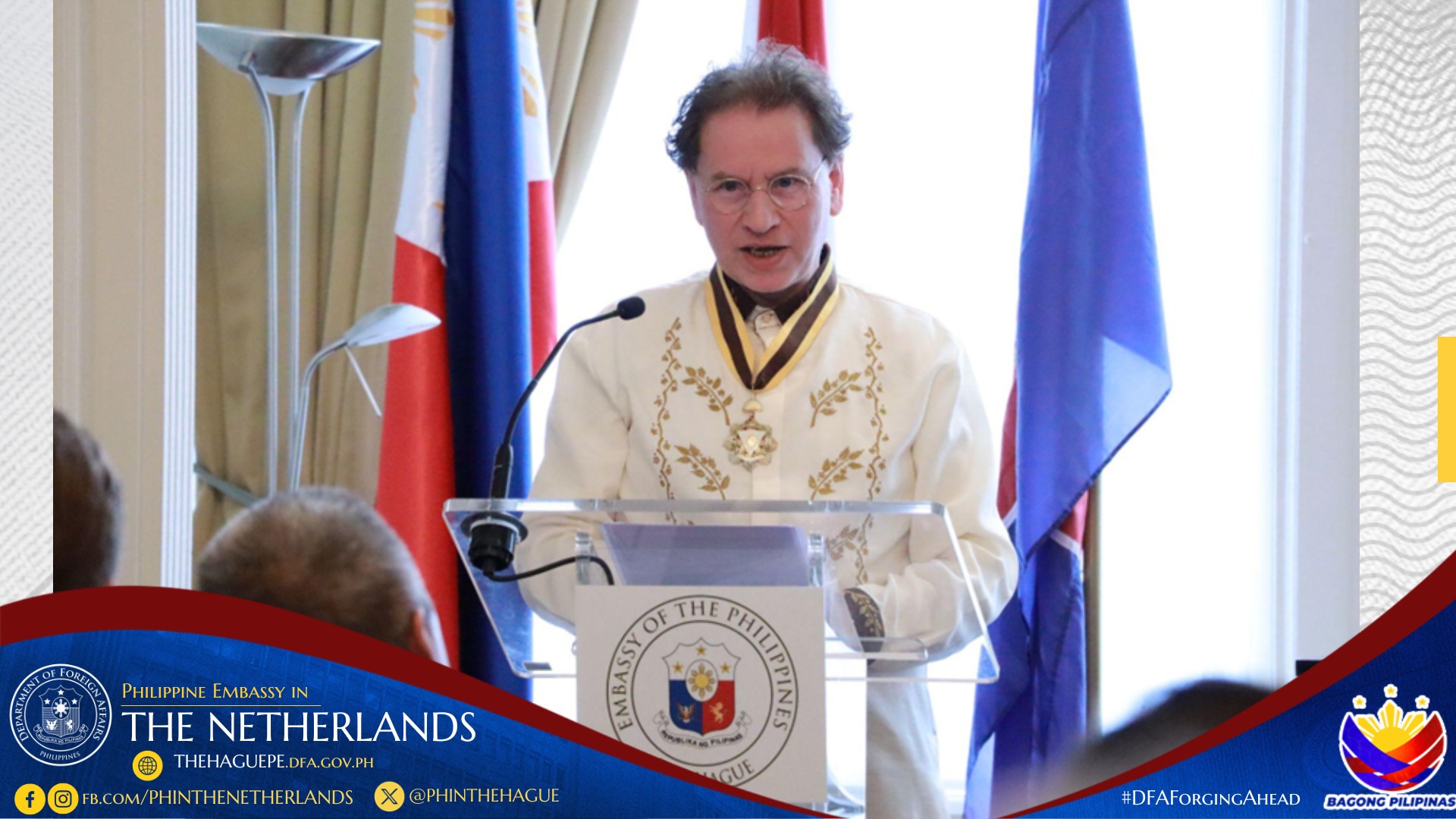
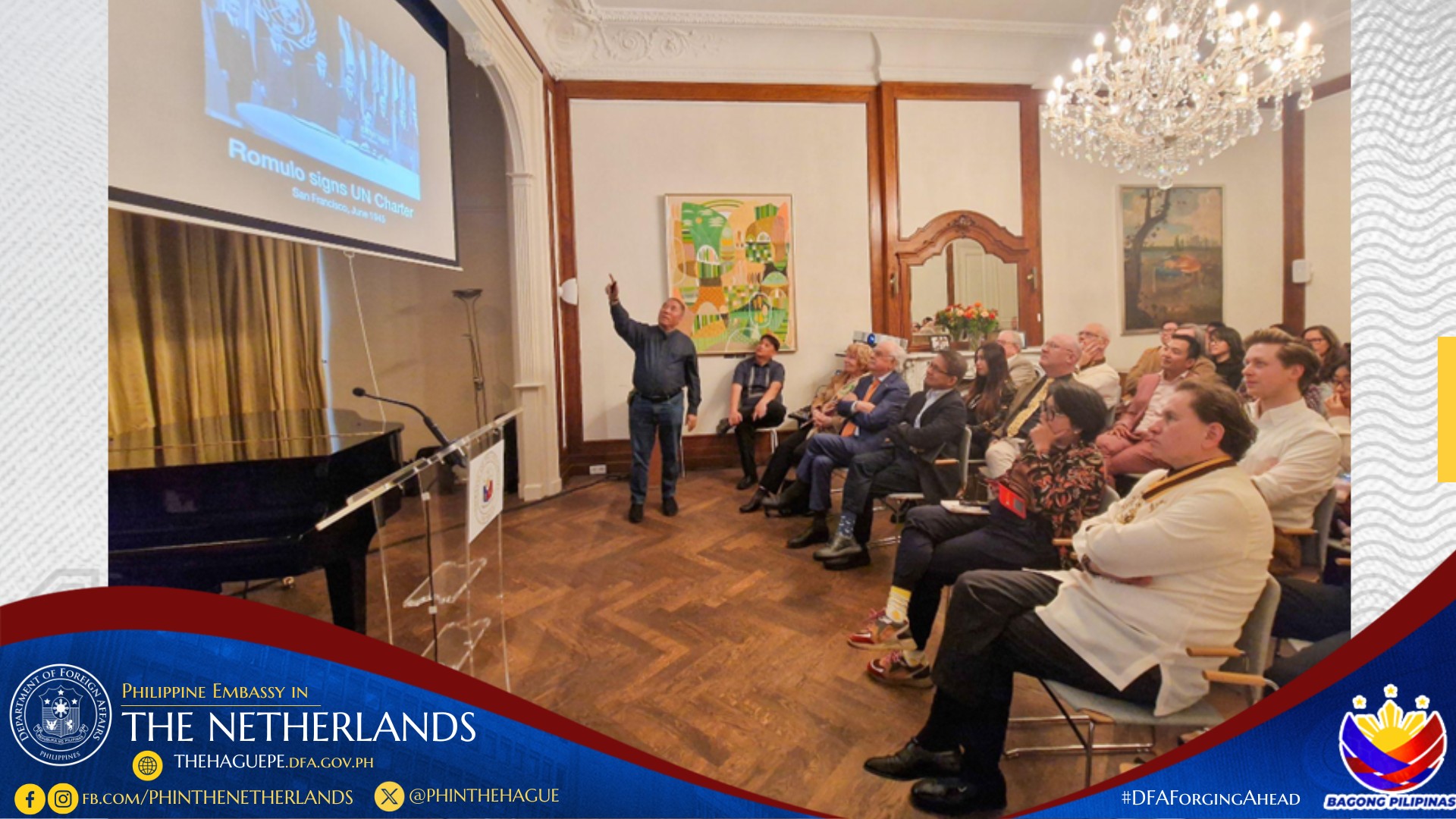
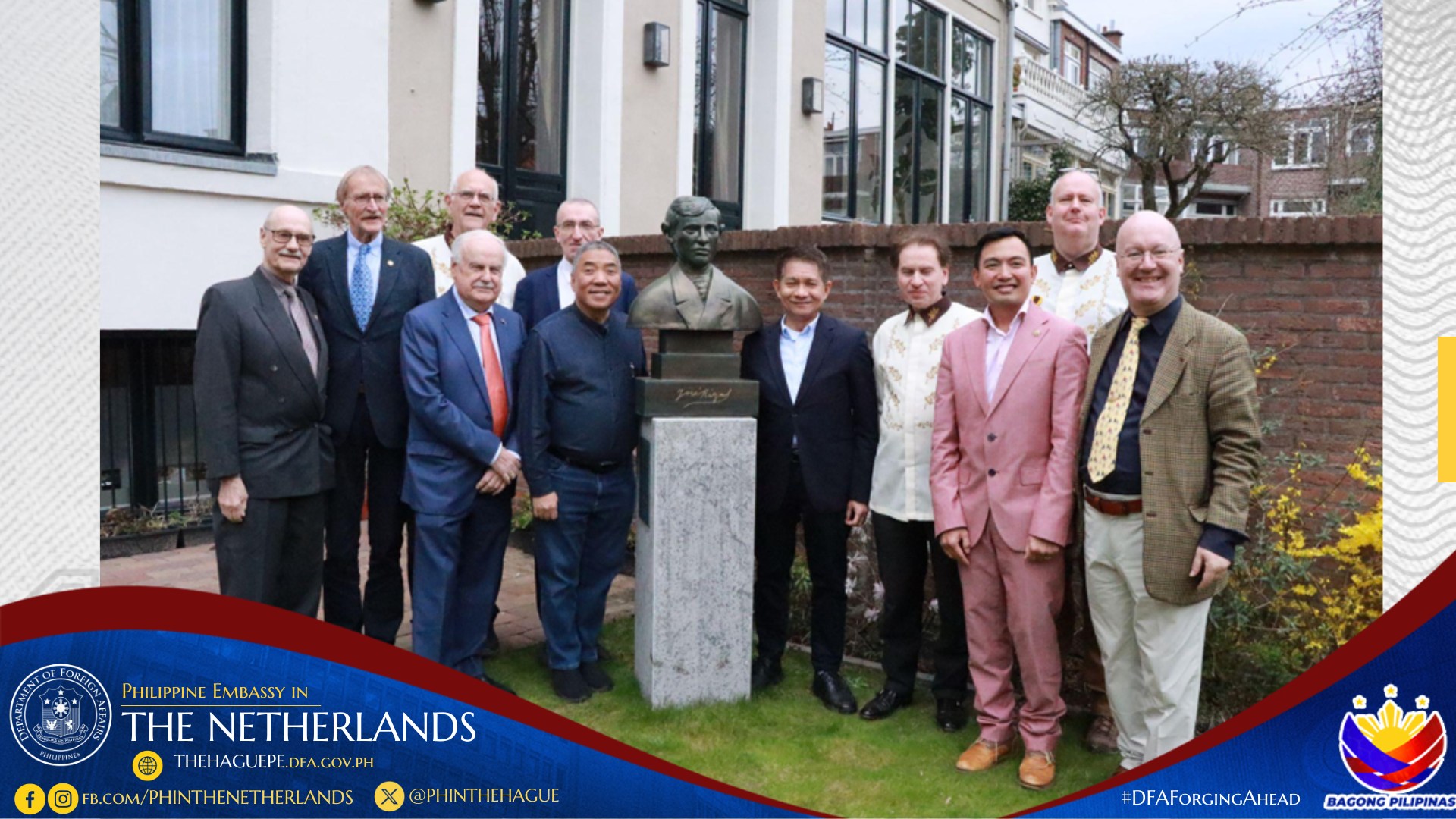
An enlightening presentation on the emergence of the Filipino nation through the lens of maps and cartography was made by highly-acclaimed historian Ambeth R. Ocampo during his lecture “The Philippines, Maps, and the Emergence of Nation” on Saturday, 22 March at the Embassy of the Philippines. The presentation was organized in collaboration with the Philippine National Commission for Culture and the Arts and the Knights of Rizal – The Hague Chapter.
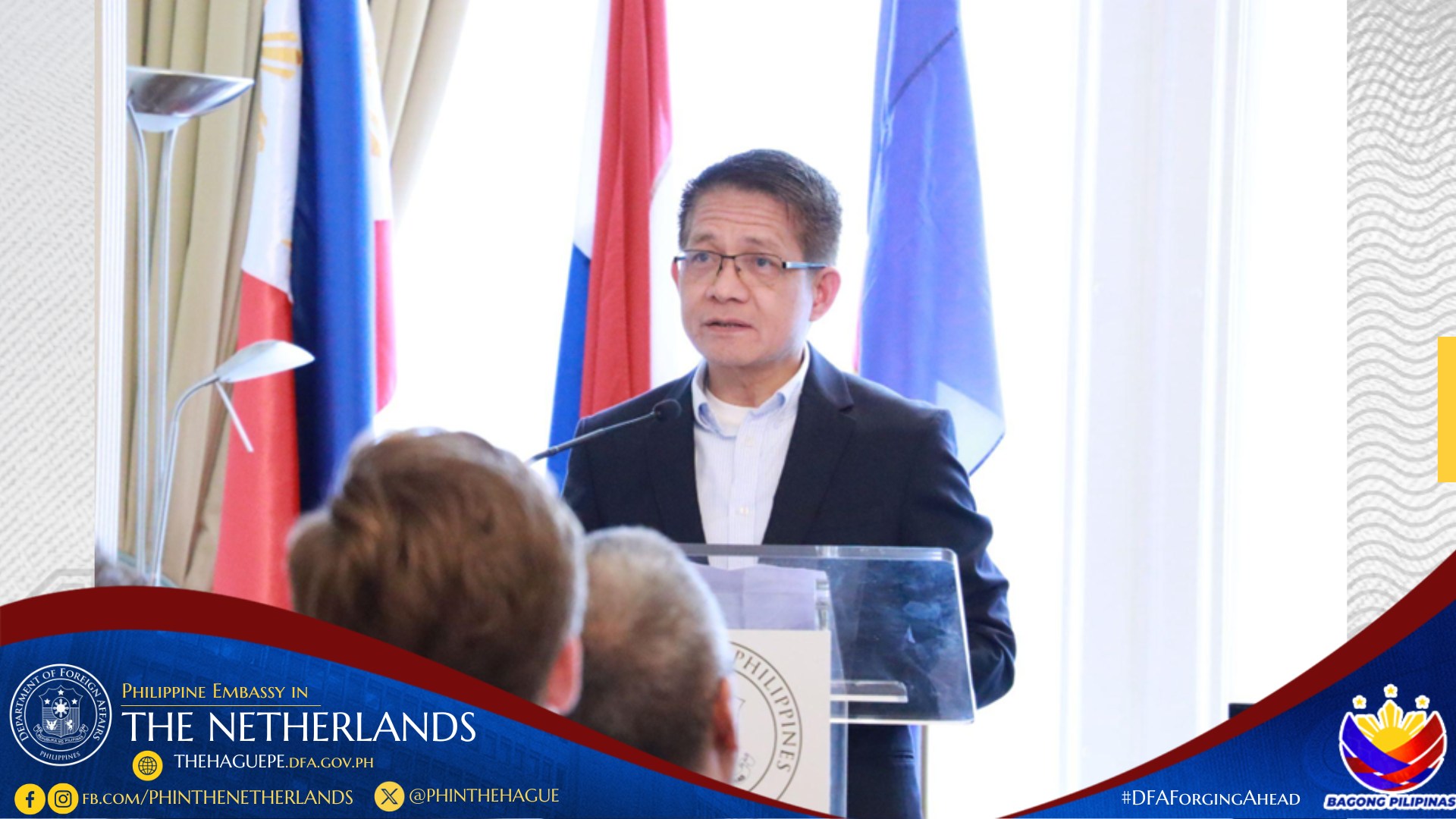
In his welcome remarks, Ambassador J. Eduardo Malaya said the works of Ocampo, Professor of History at the Ateneo de Manila University and Distinguished Professorial Lecturer at the De La Salle University, has profoundly influenced how Filipinos approach and appreciate history by looking at “beyond the usual” historical narratives and stories, and made history interesting to students and scholars alike. “For Ocampo, maps are not merely tools for navigation, but are powerful instruments that shape our understanding of geography, culture, and belonging,” the Ambassador added.
Ocampo began his presentation by stating that the Philippines is “a young nation with an old history,” and that this history can be found in many objects that are often overlooked, notably maps. He then showed various historical maps, notably the Ramusio-Gastaldi 1563 map, which is the earliest one to mention “Filipina,” and the 1734 Velarde-Bagay-Suarez map, regarded as the country’s first scientific map and considered the “mother of all Philippine maps.”
He highlighted the Philippines’ early encounters with the Dutch, showcasing the Mercator-Hondius 1619 map that made references to the naval conflict between the Dutch and the Spanish colonial authorities in the Philippines. “Aside from old records, maps give a glimpse of Philippine-Dutch relations — from the 1600 expedition of Olivier van Noort to the seven battles of La Naval de Manila,” he said.
“Old maps are a representation of nations and national identity. It outlines trade, evangelization and empire. It finds connections not only in the past but also in the future,” Ocampo said.
Sir Anton Lutter, KCR, Chapter Commander of the Knights of Rizal – The Hague, also delivered remarks, stating that the “Philippines has been an interesting country for the Dutch people, it being a seafaring nation, and that the presentation by Prof. Ocampo highlights the historical relations between the two nations.”
First Secretary and Consul Irish Kay Kalaw-Ado was the mistress of ceremonies.
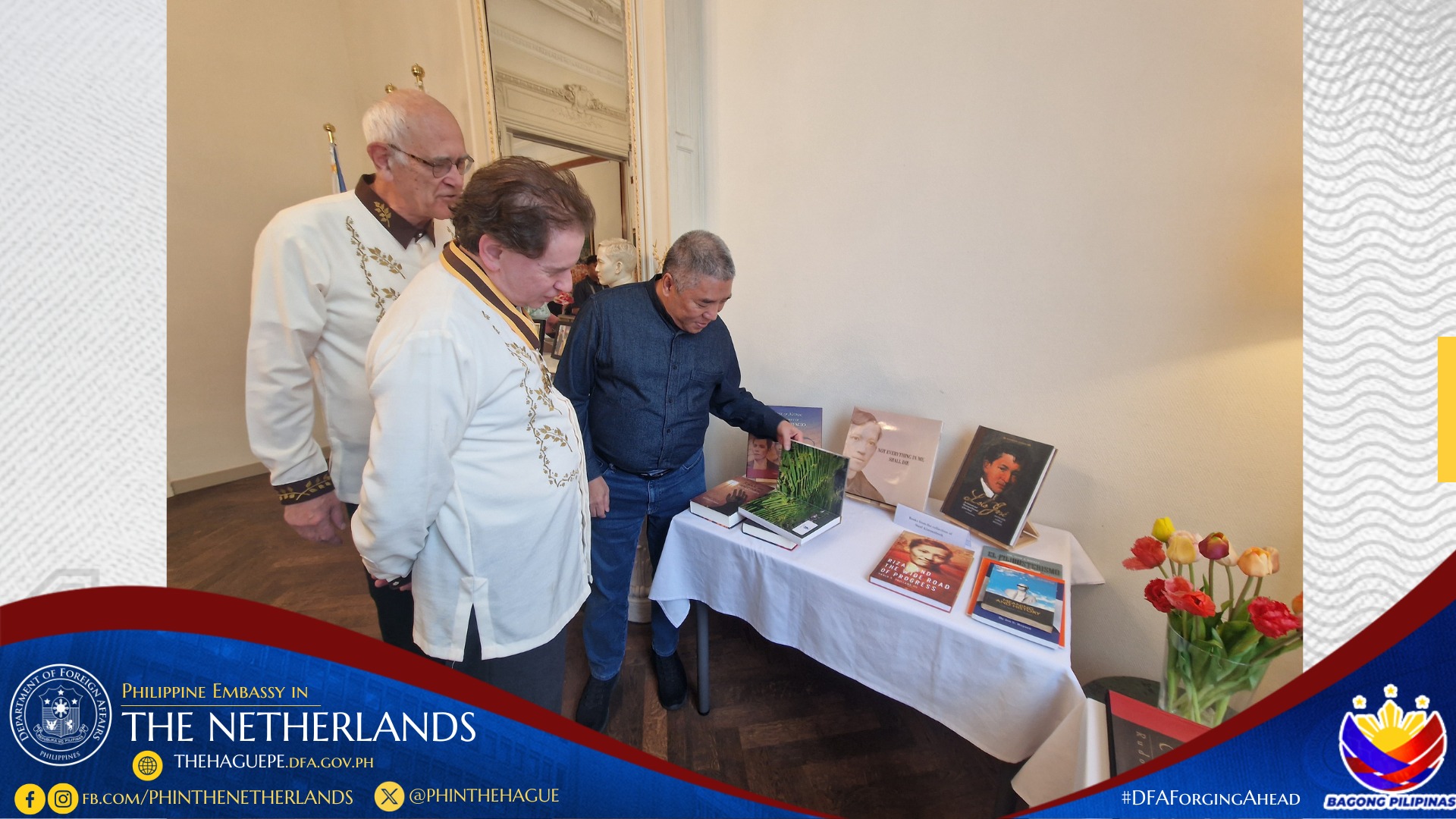
The event featured a display of historical books on the Philippines, curated by Sir Steef Klareenbek of the Knights of Rizal – The Hague Chapter. The collection included books such as “A Sense of Nation: The Birthright of Rizal, Bonifacio, and Mabini,” “Not Everything in Me Shall Die,” “Lolo Jose”, and various books on maps, namely Carlos Quirino’s “Philippine Cartography 1320-1899.” Dutch translations of José Rizal’s novels Noli Me Tangere (Raak me niet aan!) and El Filibusterismo (De revolutie), translated by Mr. Gerard Arp, were also on display.
Additional publications from the Embassy and its officials were also showcased, including Ambassador Malaya’s “Stewards of the Nation: Aguinaldo to Duterte and their Inaugural Visions” and the recently released book on the Philippine chancery in The Hague, Renewals and New Beginnings in a Heritage House, among others.
Ocampo is the author of “Looking Back,” the longest running editorial page column on history in the Philippine Daily Inquirer, and has published over 35 books, including the widely-read “Rizal without the Overcoat” and the most recent “Cabinet of Curiosities: History from Philippine Artifacts.”
Ocampo also delivered a lecture at the Leiden University on 24 March, which was organized in partnership with the Asian Studies International Association of the University.
For more information on the presentations of Prof. Ocampo, please visit his Facebook page at https://www.facebook.com/TheAmbethOcampo/. // END
SOURCE: Philippine Embassy The Hague https://www.facebook.com/share/p/1AKBWchH75/?mibextid=wwXIfr